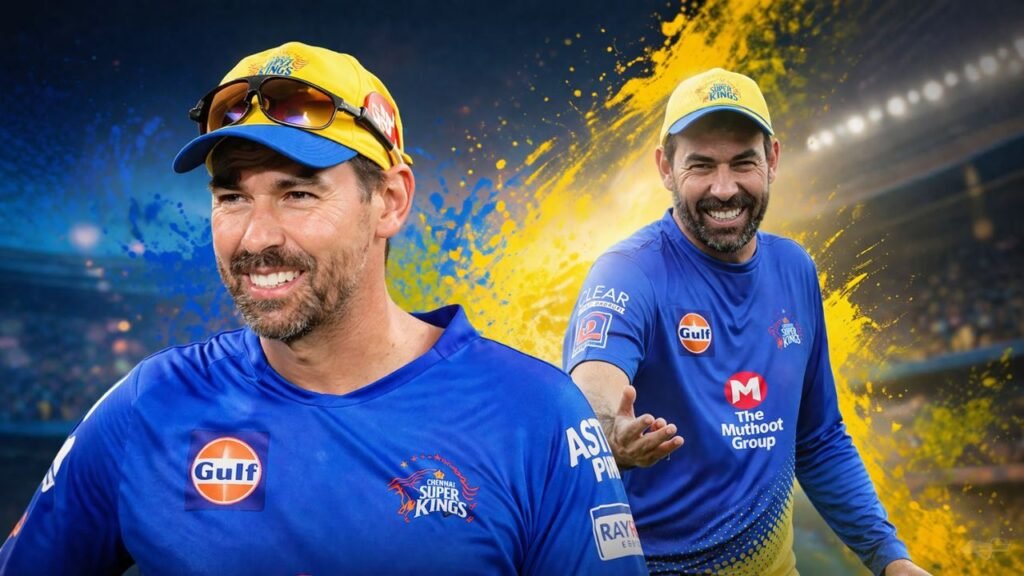
Chennai Super Kings (CSK) head coach Stephen Fleming on Tuesday conceded that the team was ‘still looking for answers’ after two successive losses saw them under hip of early pressure in IPL 2026, saying they were still trying to find their feet in a fast-changing T20 landscape. After their most recent loss to Punjab Kings, questions have once again been raised about CSK’s bowling strategy, auction choices and whether they can keep up in the high-scoring era of cricket.
Bowling woes expose auction setbacks
CSK’s bowling unit has bore the brunt, having given away 338 runs since in only 30.5 overs while claiming just seven wickets in two games. The numbers underline a unit that has been unable to stem scoring or create sustained pressure against an opponent like this one, and those failures have proved costly in a format where momentum can change faster than its sticks.
Fleming said that the franchise had been in discussions with more than one target during the course of IPL 2026 auction and has failed to get several of those targets. One of those snubbed was Lungi Ngidi, who has since excelled on other shores with his variations, in particular a slow ball that went viral. CSK named but couldn’t buy players like Ben Dwarshuis and Jason Holder
Adding to that, Nathan Ellis was excluded after sustaining an injury which prompted CSK to include Spencer Johnson as a replacement but he has not yet joined the squad. Lack of reinforcements has left the bowling attack looking thin and ill-equipped to stand up under pressure.
Missed opportunities in the chase
On their most recent outing CSK set a competent score but PBKS successfully chased down 210 with eight balls to spare. Captain Ruturaj Gaikwad also lamented a key period in the middle-overs when CSK couldn’t build on the momentum after taking two quick wickets.
Gaikwad said the match was well poised in around the 13th over as job was half-done when the required run rate went to 11. CSK, however, failed to maintain the pressure as they gave away hits at crucial junctures. “That’s how you get momentum,” he added, noting that a few tight overs there would have pulled the required rate back more and altered the path of the game.
CSK tried to exploit spin in the middle overs, taking a leaf out of Yuzvendra Chahal’s successful spell earlier in the game. But their own spinners — Rahul Chahar and Noor Ahmad — could not produce, giving away runs without capturing wickets. Gaikwad acknowledged that this phase eventually worked against them in the match.
“Everyone’s going hard from ball one”
Fleming pointed out that the nature of T20 cricket was evolving, with traditional roles in a batting line up disappearing. The idea of “finishers,” he believes, is going away as teams are employing an ultra-aggressive attack from the outset.
“It’s no longer about getting through to the 16th over,” Fleming said. “It’s insane how quickly everyone is going from ball one. He noted that teams today work to sustain run rates of 10 to 12 for an entire innings instead of counting on a late fielder.
This has made it harder and harder for bowlers, particularly in leagues such as the IPL that have adopted the Impact Player rule that enables teams to deepen their batting line-ups. Fleming admitted that he’d like to see a more even contest between bat and ball, but added CSK have to adapt quickly to stay in the game.
Missing firepower and balance
The absence of key players has also compounded CSK’s struggles. The mercurial Dewald Brevis is still out, and veteran MS Dhoni has injury concerns. Fleming was confident their return would help strengthen the team’s ability to play the high-scoring approach seen from many teams around the league.
Despite the setbacks, he insisted that CSK have the personnel to adjust. However, their current displays indicate a disconnect between the will and act—especially in the bowling ranks, where control and consistency have been overdue.
The devolving challenge of building a team
Portraying on-field problems as part of an emerging trend, Fleming also underlined the increased complexity in building a competitive T20 squad. As IPL franchises expand into leagues around the world it has become ever harder to get the best players. Because players are often attached to several different teams that fall under the same ownership groups, availability — and freedom in placing bids during auctions — is less than you would enjoy from a traditional league.
“This is one of the biggest challenges in franchise cricket,” Fleming said, adding that teams should always be looking ahead and putting money into players who are able to respond to changes in the game.
He also questioned the long-term effect of the Impact Player rule, whether it will always favour aggressive batters or eventually see a resurgence of all-rounders capable of providing balance.
A long road ahead
It is still early days in the season, CSK’s stuttering start has laid bare some key deficiencies that need urgent addressing. Their bowling unit must execute better under the duress of pressure and the squad, as a whole, needs to adapt the up-tempo mindset that T20 cricket embodies.
Challenges like those now facing a franchise celebrated for its consistency and tactical brain represent a test of adaptability. As he and his team regroup, the challenge will be to strike a balance that is equal parts selection choice and strategy that’ll allow them to keep up with a format that’s more dynamic than ever.
Read also : IPL 2026: GT vs RR Match Preview | MI Defending Favorites, New Look DC Eye Upset Amid Rain | PBKS Win Toss, Opt to Bowl