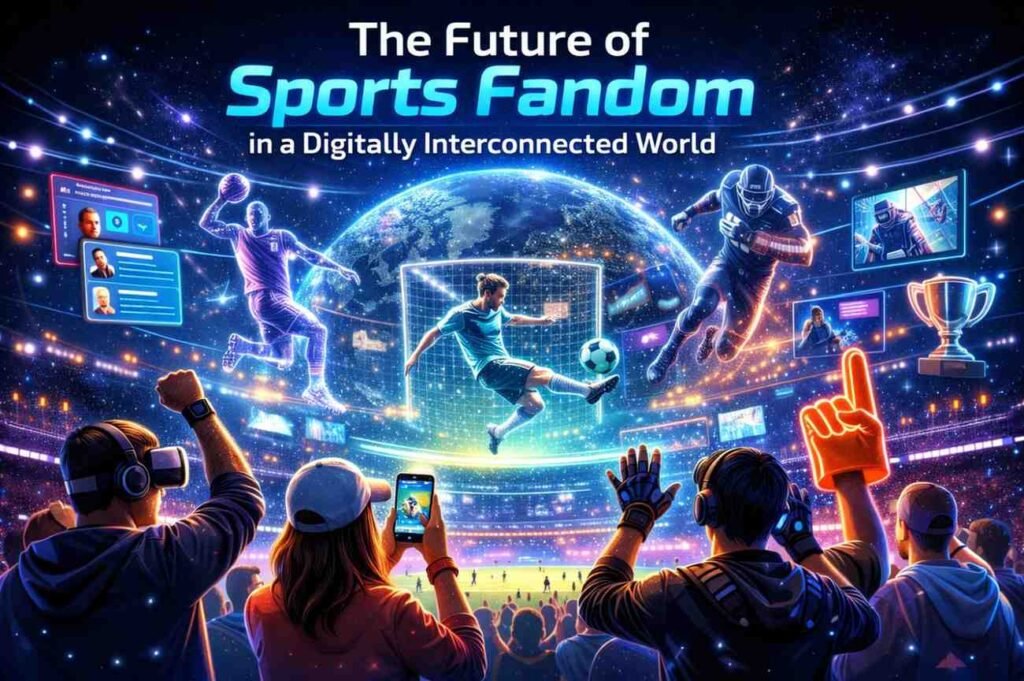
Over the past decade, the nature of sports fandom has evolved massively from a passive experience that was largely rooted in stadiums and television to what it looks like today: interactive, experiential and global. In today’s digital-first world, fans are not just passive consumers — they also participate in and create content and act as analysts or influencers. Time will tell how this dynamic continues to develop, but one thing is certain; the future of sports fandom will be more diverse and multi-dimensional than ever before.
How We Went from the 24/7 Digital Fan to a Specialist
Often, sports fans had no choice but to track their favourite teams during live play or based on a perceived schedule. Yet smartphones and social media platforms and streaming services make fandom, now, truly 24/7. Today’s fans don’t just interact with the content at a single touchpoint – live scores, highlight reels, behind-the-scenes content or interactive discussions.
Digital platforms have enabled fans to connect around the clock, a phenomenon experts refer to as “always-on fandom”. Supporters can interact instantaneously through online communities, forums and apps, exchange views and kvell together over victories. That evolution has made fandom a year-round, 365-day phenomenon rather than something seasonal.
Social Media and Community-Driven Engagement
Social media is the foundation of contemporary sports fandom. It has transformed how fans consume and experience sports content across countless platforms — X (Twitter), Instagram, and YouTube. It also means fans no longer need to depend on traditional broadcasters; they follow athletes and athlete fan pages themselves while participating in the global conversation.
And the ascendancy of digital creators and influencers has also changed the game. Many fans now consume reaction videos, live streams and commentary from content creators in addition to actual matches. This trend marks a blending of gaming and entertainment in which the personas steering the content are on par with the actual game itself.
Platforms publishing also live updates and analysis — cricket news for the fans — will be major players in keeping fans across geographies engaged in this environment.
Personalisation Through Data and AI
But possibly the most important trends forging the new future of sports fandom are data analytics and artificial intelligence. As ownership and management groups gather more data on their customers, countless sports organisations, are developing personalised experiences for fans based on knowledge in their possession.
From personalised notifications and content feeds to AI-enhanced match predictions and recommendations, personalisation is all around us. Younger fans, in particular, prefer content that aligns closely with their distinct interests and behaviours and viewing habits.
You can enhance service experience while also bolstering loyalty and retention for fans with such data-driven approach. Catering specific content for these fans, the fans know that they share their own story with this particular team or player but when curated this way, half connects and emotions get attached more.
A Colliding of Sports, Gaming and Betting
The lines are being blurred between spots, gaming and digital entertainment. Fantasy sports and esports, as well as interactive gaming platforms, have created ways for fans to engage with sports other than passively watching them.
Digital betting ecosystems have also become an important aspect of the 21st-century fan experience. A new era for fans that converge through platforms offering online casino India services has allowed fans to have a stake in the game outcome. While this results in a more thrilling and engaging landscape though, it raises the issues of regulation and responsible use.
As it slips over the spectrum of cybersporting participation, this union of spheres has given birth to a transformative breed of fandom with an often hostile relationship with tradition, as gaming elements have entered and now permeate the shell that separates sports from entertainment – live stats and leaderboard-based predictive games are offered up alongside traditional broadcasts for reward mostly through consumerism.
Immersive Technologies and Techniques — AR, VR & The Metaverse
The world of fandom is undergoing a radical transformation, driven by the rise of immersive technologies like augmented reality (AR), virtual reality (VR), and the metaverse. These innovations will revolutionise the way fans engage with sports.
This means being able to attend a cricket match in the metaverse, sit next to fans from different parts of the world in a digital stadium or use Augmented Reality (AR) to get real-time player statistics while watching a live game. These technologies will not only allow for greater access, but they will also open up new revenue streams for sports organisations – virtual merchandise, digital tickets and exclusive viewing experiences.
The Globalization of Fandom
Digital connectedness has blurred geographic borders, enabling supporters to cheer teams and athletes from anywhere across the globe. Cricket followers with access to several Indian television channels could now for years follow the Aussie or English or Caribbean leagues, even if not so far from start to finish.
That globalisation has aided the expansion of fan bases and developed some oddly variegated communities. Sports audiences are also more diverse, with growing participation by women and Gen Z fans.
The rise of globalisation has encouraged sports organisations to adopt global strategies so they can grow the efficiency of their localisation efforts to appeal to multilingual audiences and culturally marketable people.
Impact of Streaming and Digital Media
Machine learning actionable insight: As the sports streaming boom continues and we are wary of traditional OTT packages, customisable experience options for viewing are a painful need in every business that they need to cater to. Streaming offers on-demand viewing of matches (you can fast forward through all the build-up and get right to the action), flipping between camera angles, and interactive features that traditional TV service does not.
The shift toward digital media has increased competition among broadcasters, leading to innovative formats and better viewing experiences. Fans have been spoilt by high-quality, interactive and personalised content across a variety of devices.
And the new wave of short-form content — reels, highlights and whatnot — is more bespoke for quick engagement, helping satisfy that fast-paced consumption need to cater to decreasing attention spans, especially among younger consumers.
Challenges in this Digital Fandom Age
While digital transformation has many benefits, it also comes with some challenges. Issues such as data privacy, toxicity and over-commercialisation are reaching a crisis.
Sports-orientated online communities can sometimes be prone to harassment and divisive discourse. Additionally, there is a risk of revenue-driving becoming greater than the connective fibre and engagement itself, leading to overselling themselves ultimately making it easier for long-term fans to be isolated.
Striking a balance between new technology and modes of interaction and authenticity will be critical for sports organisations that wish to retain trust and keep their fans invested in the long run.
Future: Hybrid with Interactivity and In-Person
Looking to the future and sports fandom, the most likely scenario will be a mix of both physical and digital. Stadiums will become entertainment experience destinations with innovation driving more engagement, unmatched services and better connectivity.
Digital platforms will be more innovative than ever, offering fans ways to engage and interact — and play. So AI is adulthood so it can use the immersive tech and real-time data to form a larger area ecosystem.
In the end, it will be sports fandom’s future shaped by technologies and audience expectations. The days of passive consumers were long gone; soon they will be a part of complex digital construction.