Will Dhoni Play IPL 2026? Latest Updates, News & Predictions
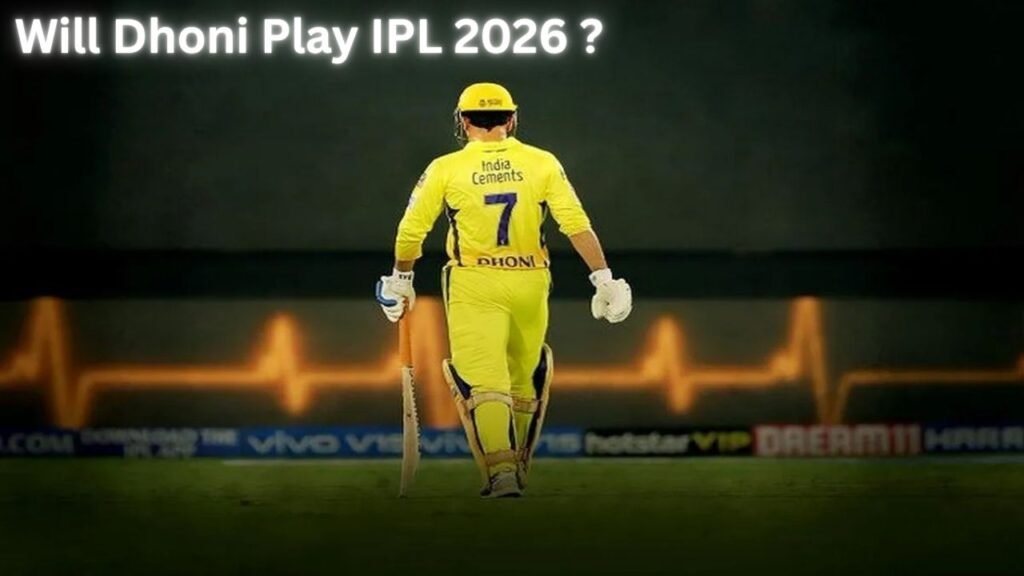
The question “Will dhoni play Ipl 2026” is now one of the most popular cricket queries among fans in India and around the world. He might have retired from the game some years ago, but whenever a new season approaches, the name of MS Dhoni continues to dominate conversations on and off television. The legendary figure, calm leadership and the only Indian cricket player with such a huge number of fans make each decision concerning his IPL future a major topic of national interest. As IPL 2026 begins to come into focus, the feeling of uncertainty once again starts to rise. Fans need answers, experts pour out predictions, and social media is alive with arguments. So, will dhoni play ipl 2026, or has this iconic cricketer finally reached the end of his IPL journey? By integrating all original statements, health updates, franchise needs, and real choices in this detailed article, we give you a weather forecast clear of fog. MS Dhoni’s Legacy in the Indian Premier League Will dhoni play ipl 2026? Diving into his monumental IPL history is essential for a proper insight. Read on to find out why MS Dhoni, who’s anything but the average ballplayer at this venue, leads through consistency, leadership and success. Since the beginning of IPL in 2008, Dhoni has been one of the league’s most influential figures. For example, Dhoni was behind today’s scene where we have so many different brands sponsoring teams because all that free publicity meant I could sell them off and make some extra money. Not only is this deal done by a man who will be among the richest Indians in years to come – but also an honor upon team management as well; will dhoni play ipl 2026 remains surreal. Why Whether Dhoni Plays IPL 2026 So Matters Many If dhoni will play ipl 2026 or not is of interest to still many other people besides cricket enthusiasts. His fans are too numerous and his influence is widely spread all over India: watching Dhoni going on to the field is almost a ceremonial moment, as one poet called it “all people’s heaven Their eyes are tearful and many more will find (or is that perhaps like the flower faded away after one night?) shows of culture.” Each season of the IPL featuring Dhoni feels a little like reading an addendum chapter in an already well-written legend. It’s getting longer when examined under the lens of time and space. From a commercial perspective, the presence of Dhoni drives television ratings, ticket sales and sponsorship value exponentially. Franchises and players know that broadcast ratings track star performers; even more significantly, most likely the person’s name, origin year or other pertinent information has an indirect link to broadcast performance. Dhoni’s commercial impact gives another dimension to the argument over whether he will (or will not) play in 2026 IPL, making it a subject not just for fans but also for IPL’s business aspect. Age and fitness: The most important factors to look at In IPL 2026 The largest factor in deciding whether or not will dhoni play ipl 2026 are his age and physical condition. When IPL 2026 rolls around, Dhoni will be in his mid-40s, a time of life when most cricketers have long since retired. But to date, Dhoni has never been your average athlete. Sometimes His explosive running between the wickets has died down – yet his wicket-keeping skills remain acute, reflexes are quick and game sense sharp. Over the past few IPL seasons, Dhoni has adjusted his role – batting lower in the order and concentrating on short, but effective innings. Throughout the season, his fitness levels are carefully managed, making the question will dhoni play till 2026 a realistic rather than an over optimistic one. MS Dhoni and His IPL Future in His Own Words Whenever questioned about his retirement, Dhoni had very comprehensive, balanced replies. For example, he has repeatedly said that he wants it to depend on whether he is enjoying the game rather than merely pursuing records. These assertions help steer public opinion will dhoni play ipl 2026. As Dhoni has suggested, what determines his decision to play another season of the IPL is whether he can make a real contribution to the team. If he thinks it will add value to have him there (or under his leadership) then odds increase. With such an approach, 2026 seems quite possible and perhaps will dhoni play ipl 2026 can go on forever. Chennai Super Kings Perspective on MS Dhoni Playing IPL 2026 From the franchise’s point of view, the question of whether dhoni will play April 2026 is closely related to team strategy and long-term planning. CSK has always treated Dhoni as more than just a player. He is mentor as well as leader, the team’s emotional backbone. Even though Dhoni might not play every match or bat every inning, just being around the war makes young players look up to him. Currently, CSK Management preserves Dhoni for as long as the master wishes to play. This strong and consistent support from the franchise offers a high probability that dhoni will play in ipl 2026 remains a real possibility. In adapting roles: How MS Dhoni may perform in IPL 2026 If it is indeed the answer to will dhoni play ipl 2026, his responsibilities might not come as expected this time round. It is no longer crucial that Dhoni bat for extended periods or keep wickets for every over of every day’s play. Instead, he can work in the role of three specialists: first up as a finishing operator; coming in second to finish off tailenders with ease and grace; then hitting magnificent sixes that will decide matches all round. The changeable rules and format of the IPL mean that experienced players can be used in all manner of smart ways. Dhoni’s biggest asset is his cricketing brain, and just a small amount of on-field participation can make a big difference. This